Model management view in the web client
Permissions and access
Minimum role: Researcher
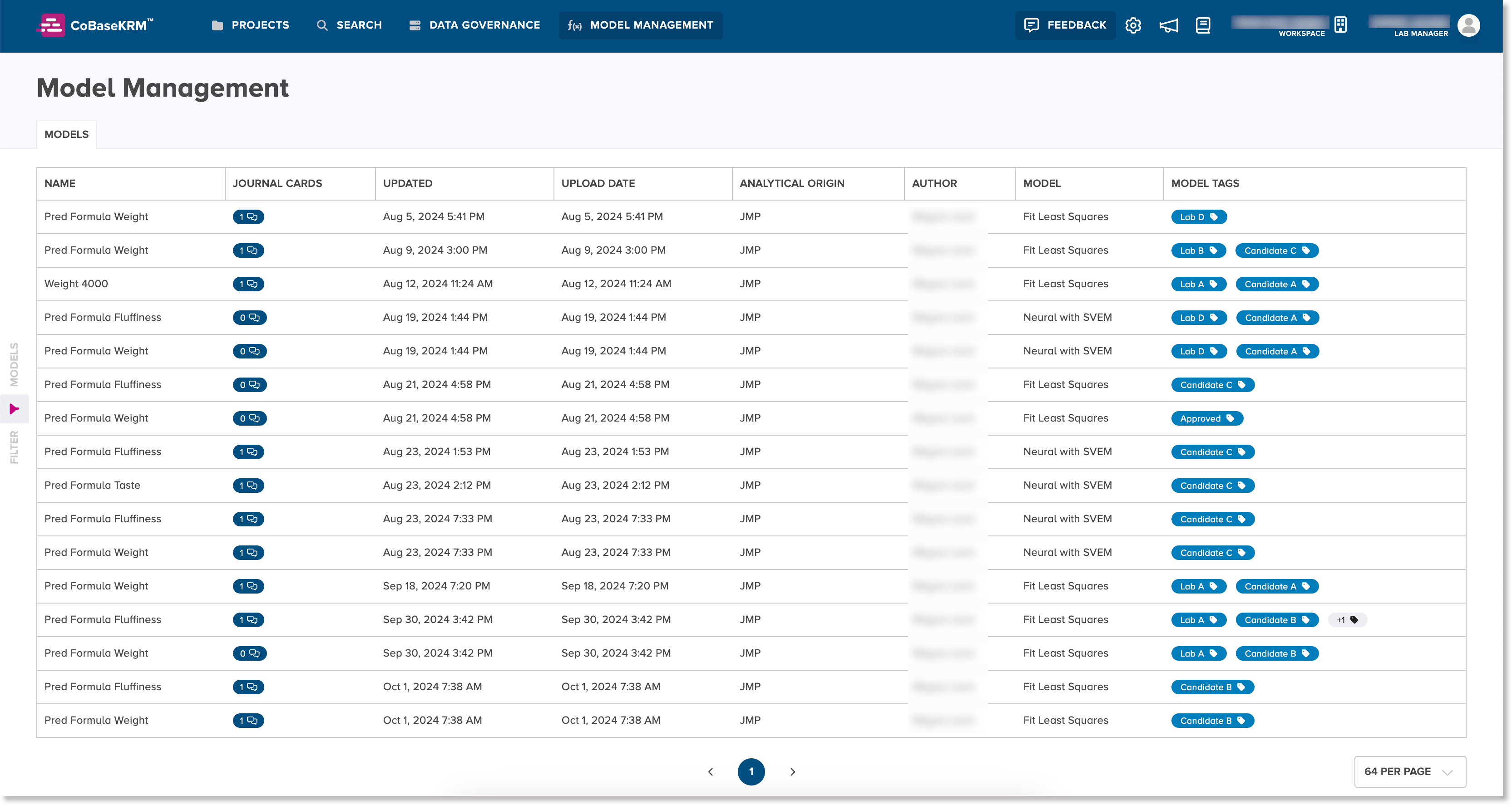
The Model management view in the web client displays a full list of existing models that have been uploaded to the database.
Note
The Model management view is for the details of models only. If you want to edit or download any models, use the JMP add-in for CoBaseKRM.
The following columns of details are displayed for each model in the Model Management view:
-
Model name
-
Journal cards defined for a model
-
Last modfied date of a model
-
Date on which a model was uploaded to the database
-
Source and formula type of a model
-
Username of the user who uploaded the model to the database
-
Model method
-
Tags associated to a model
Display details of a model
For each existing model in the list, you can click on a model name and a right panel appears, showing a summary of details of a model. To close the right panel, click or tap either the Close button in the bottom right or the close (x) icon at the top right.
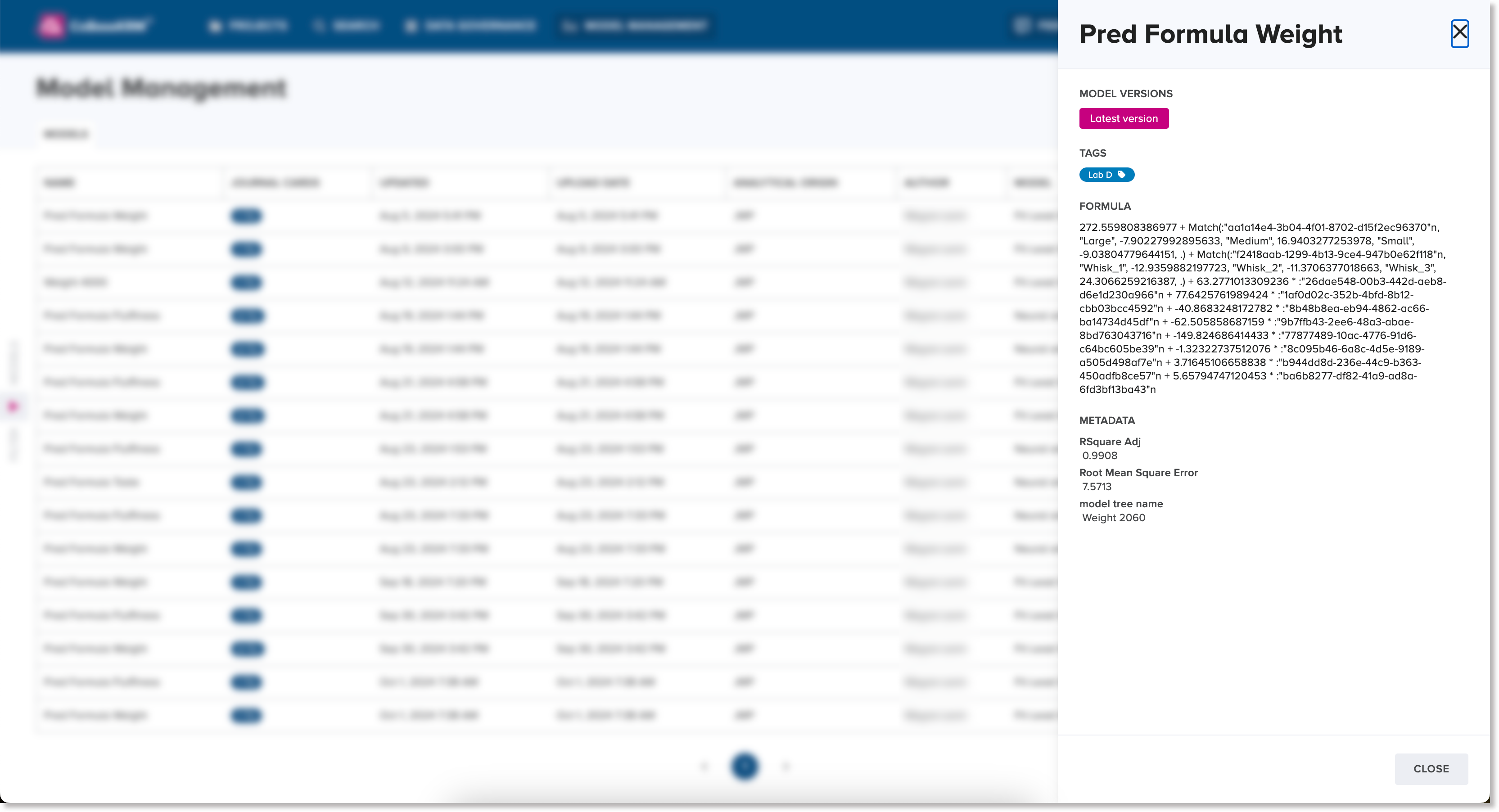
The right panel displays the following specific details for a model:
-
Latest version of a model
-
Model formula
-
R2 Squared Adj - the adjusted R2 value is a statistical measurement of the goodness of fit of a model
-
Root Mean Square Error (RMSE)- the RMSE value is a measurement of the average deviation between a model's predicted values and the actual values.
Filter a list of models
The Model Management view features a left panel of filters, which is hidden by default. To display the left panel, click or tap the expand (right arrow) icon at the left border of the Model management view.
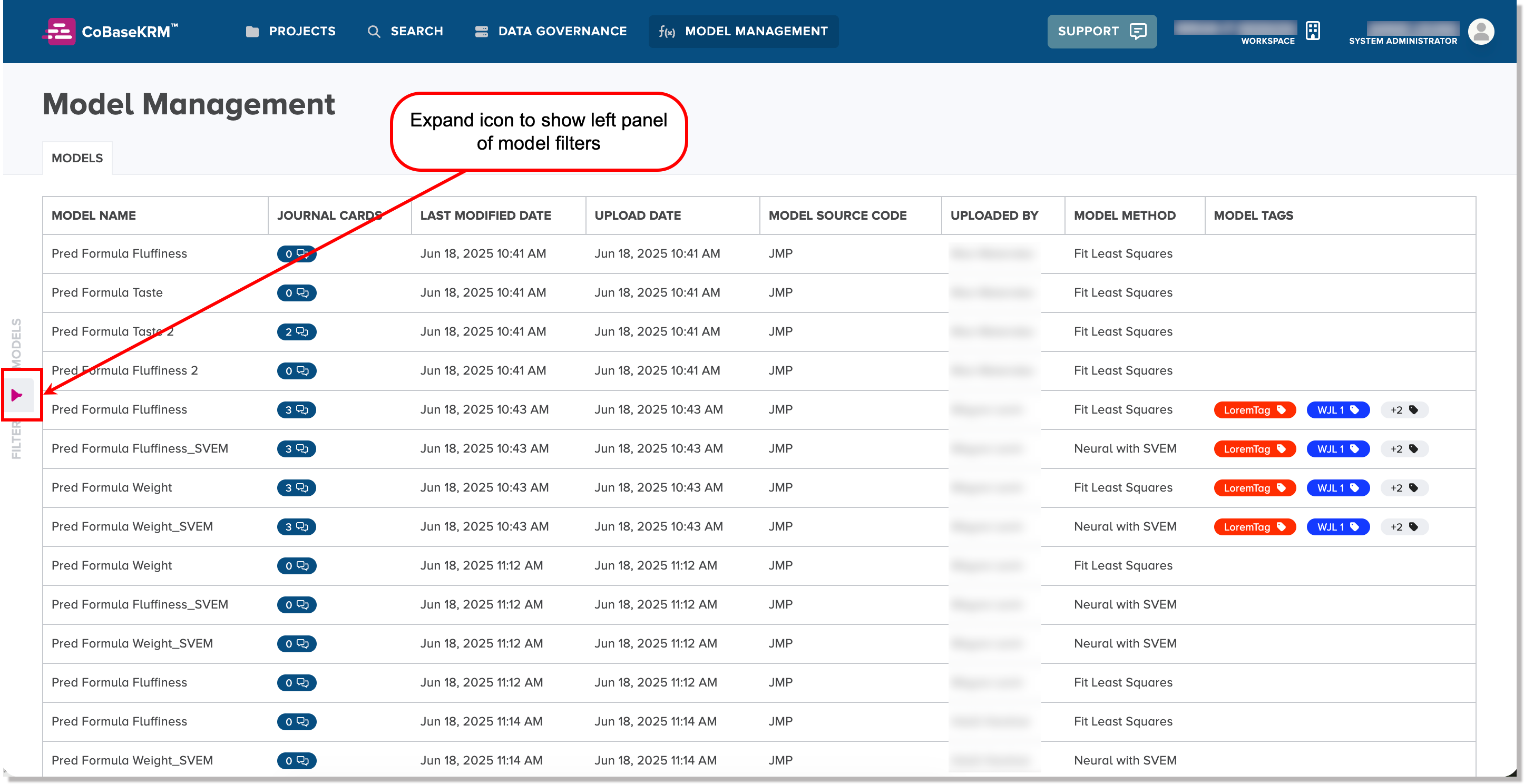
To hide the left panel, click or tap the expand icon once again.
In the left panel, you can choose from the various lists of filters to narrow the list of models shown. For each object name shown, click or tap the chevron down icon to expand the corresponding panel to show a list of object names or IDs. To narrow a filter list for easier selection, use the search field above each list.
-
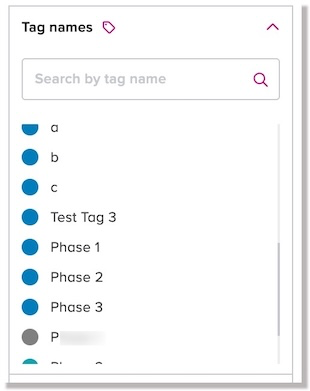
Tags filters - expand the panel box and select one or more checkboxes for tag names to define tag filters
-
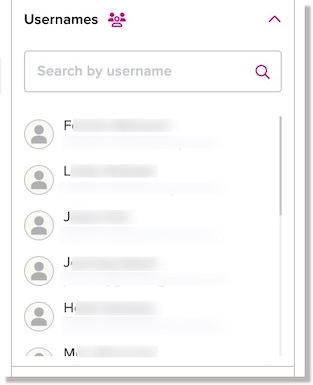
Usernames filters - expand the panel box and select one or more checkboxes for usernames to define username filters
-
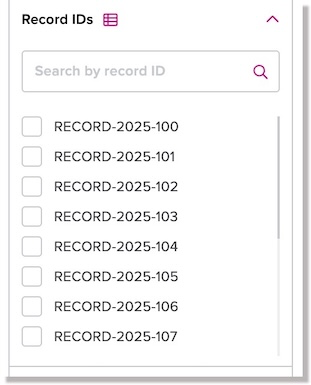
Record IDs filters - expand the panel box and select one or more checkboxes for record IDs to define record ID filters
-
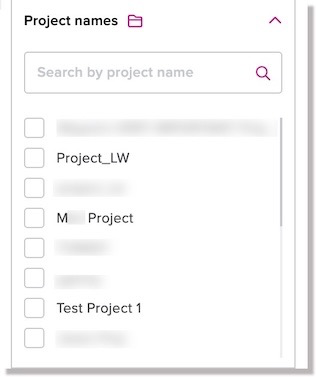
Project name filters - expand the panel box and select one or more checkboxes for project names to define project name filters
-
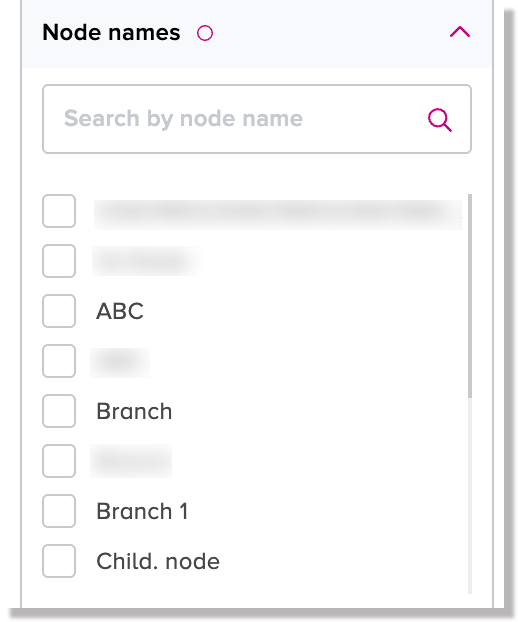
Node names panel box - expand the panel box and select one or more checkboxes for node names to define node name filters
-
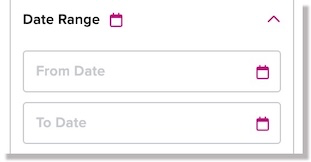
Date range filters - to define a date range for an upload date, expand the panel box, click the From date field to select earliest date of the range from a calendar chooser and/or click the To date field to select the latest date of the range from a calendar chooser, as needed
-
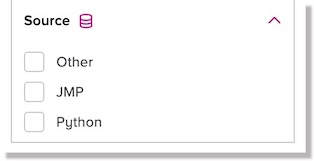
Source filters - expand the panel box and select one or more checkboxes of sources to define source filters
-
Parameter filters list - expand the panel box and select one or more checkboxes of parameter names to define parameter filters
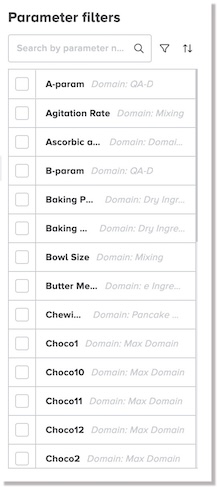
To narrow the list of parameter filters, you can use the following features:
-
Use the search field to type in some characters to show similar or matching parameter filters in the list.
-
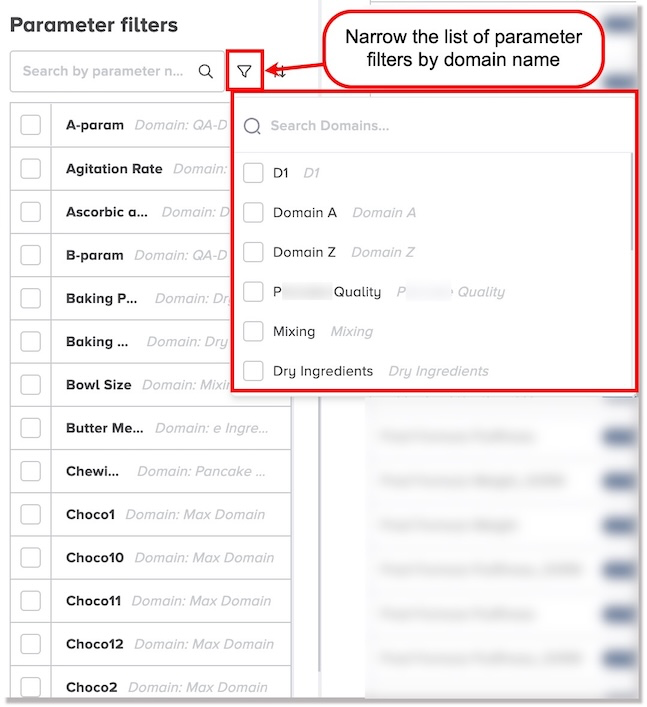
Click or tap the filter icon to display a list of domain names by which to narrow the list of parameter filters.
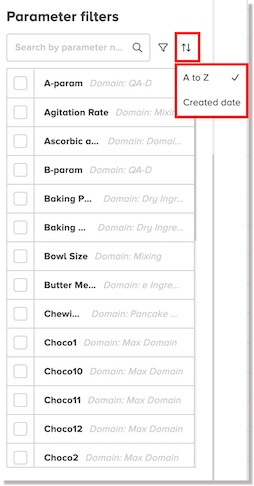
To sort the list of parameter names either alphabetically or by a parameter's created date, click the sort icon and select either of the following options:
-
A to Z - sort alphatically in ascending order from A to Z.
-
Created date - sort by a parameter's created date from latest to earliest.
-
Add a journal card to an existing model
You can add a journal card to an existing model in the web client.
To add a journal card to an existing model:
-
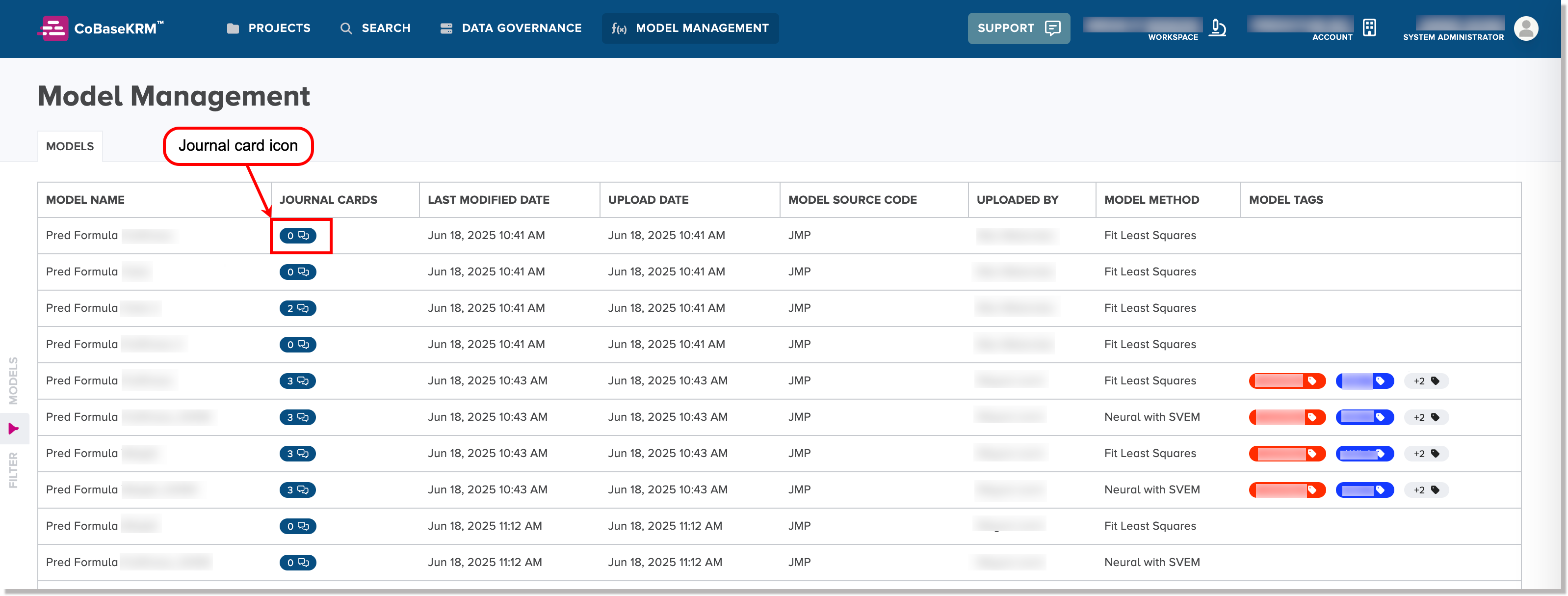
In the Model Management view, click or tap the journal card icon for an existing model.
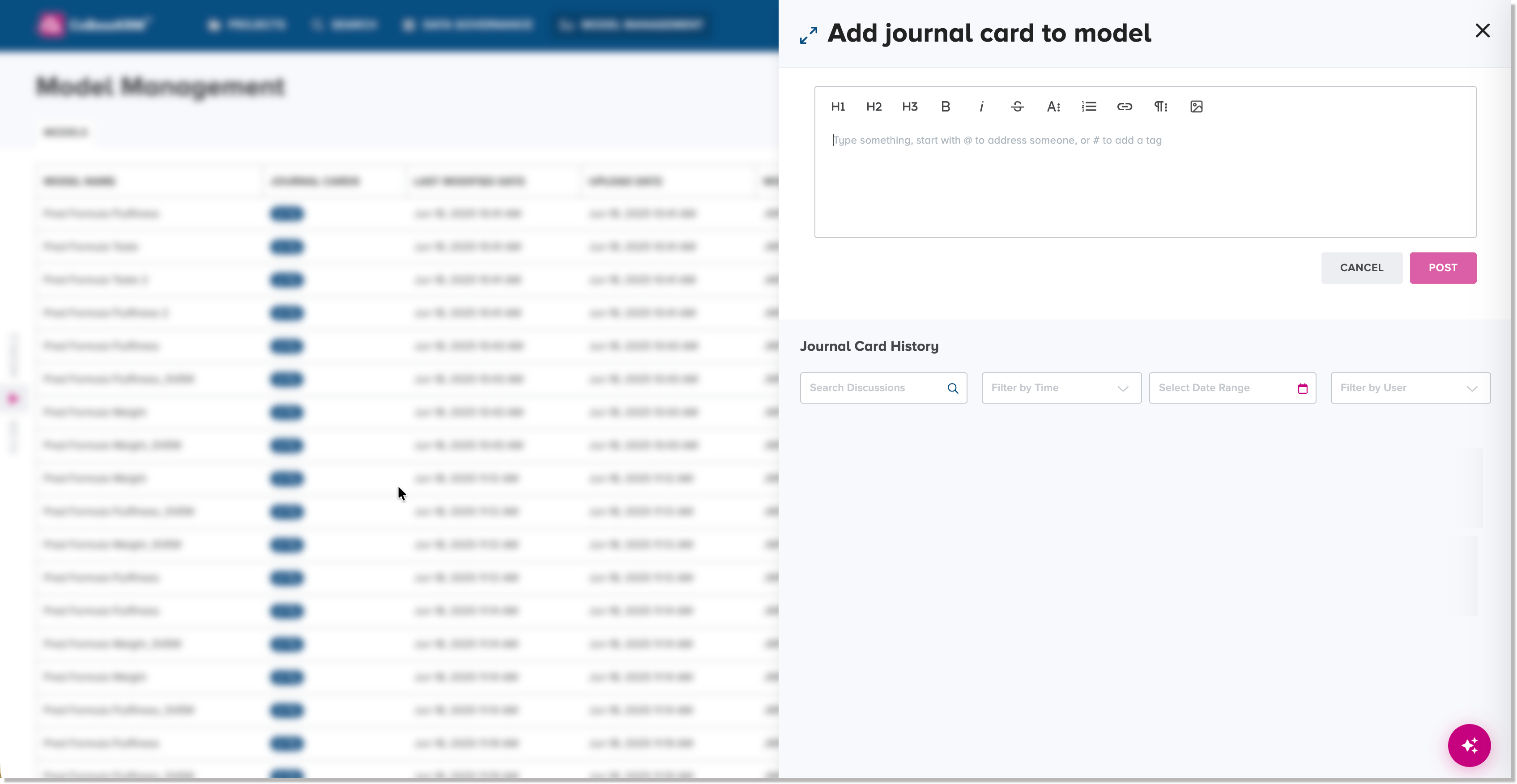
The Add journal card to model dialog appears.
-
Click or tap inside the journal card editor to type your journal card.
- Use the toolbar to format your text.
- Use the image icon to add files to a journal card.
- To mention a user, type the "@" (at) character to display a list of usernames associated to the project and select a username.
- To add a tag, type the hash (#) character to display a list of tag names and select a tag.
-
Click or tap Post.
The journal card is added to the journal card history for the model.